
Simulation engine
Build telephone, video and face-to-face cases by domain, role, speed, register, terminology and emotional complexity.
Students, trainers, academy staff and language-service operations work from one learning record: simulations, feedback, events, credentials, readiness and pathway review.
The platform organises practice, assessment, events, credential support and employer readiness so the academy can see what each student needs next.
Build telephone, video and face-to-face cases by domain, role, speed, register, terminology and emotional complexity.
Assessors mark omissions, additions, distortions, delivery issues and professional conduct directly on the recording.
Masterclasses, public-sector forums and employer sessions appear beside course tasks, not on a separate forgotten page.
Credential status, induction progress, work rights, language demand and readiness scores support employment pathway review.
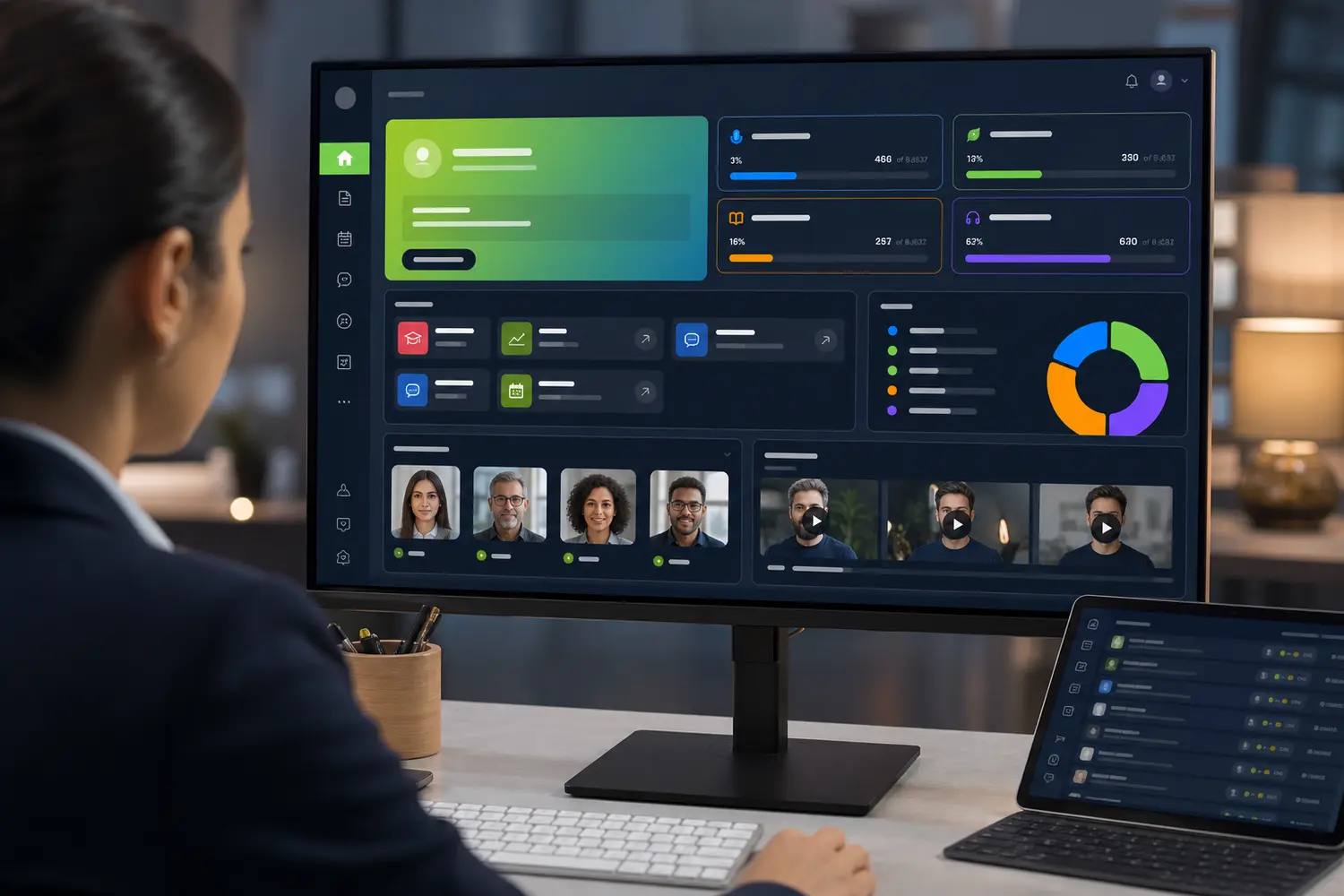
Each user sees a different working view: students track next tasks, trainers review performance, providers monitor cohorts and operations checks readiness.
Live room monitoring, scenario control, timestamped notes, rubric templates, second-review queues, language-pair filters and quick links to assign the next drill.
Attendance, completion, simulation volume, assessment trends, support flags and clear proof that the cohort is progressing.
Availability, credentials, compliance, language demand, QA risks and a supervised deployment path that protects both clients and new practitioners.
Start with reliable hosted products, then integrate around the workflows that prove value: learning delivery, real-time simulations, assessment evidence, CRM follow-up and privacy controls.
Lessons, modules, quizzes, CPD records, student progress and event attendance.
Telephone bridges, video rooms, recordings, headset checks and assessor observation.
Scenario generation, controlled role-player prompts, transcript drafts and coaching summaries with human review.
Applications, language pairs, sales follow-up, event bookings and employment pathway status.
Rubrics, recordings, second reviews, evidence files and readiness trend reporting.
MFA, role-based access, privacy notices, audit logs, retention rules and separated client/training data.
The public site can stay lightweight while the private portal grows behind it: enrolments, student records, authentication, payments, CRM updates, assessment storage and protected trainer workflows.